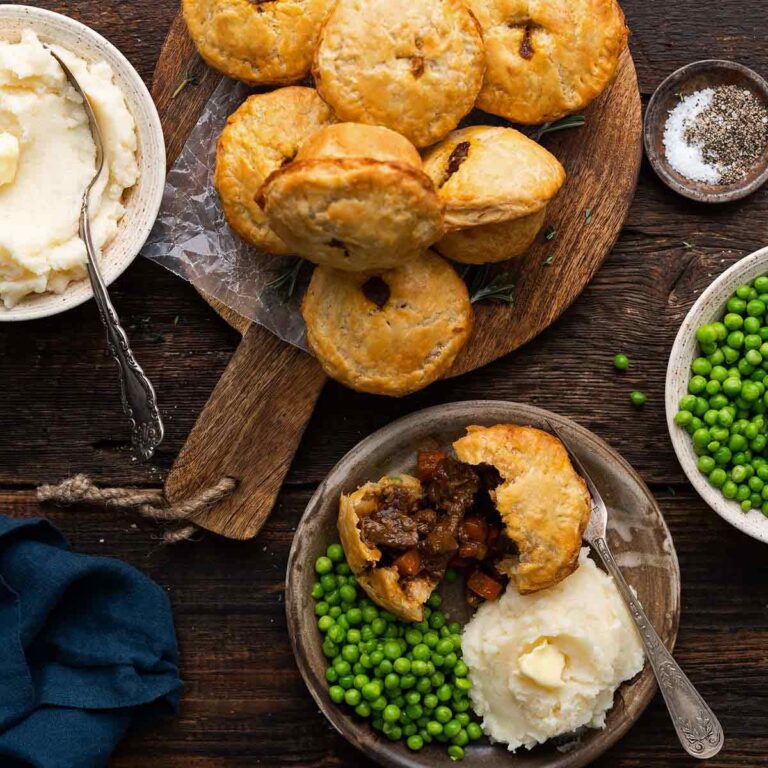
Description of this recipe
This recipe provides a delightful twist on the classic British pub fare, Steak and Ale Pie, by presenting it in individual servings. These mini pies are perfect for portion control, easy serving, and an elegant presentation, making them ideal for both casual dinners and special occasions. Each pie is filled with a rich, flavorful beef and ale stew, encased in a flaky, golden-brown pastry crust.
Why you will love this recipe
You’ll adore this recipe because it transforms a comforting classic into a sophisticated and convenient dish. The individual pies are not only visually appealing but also offer a perfectly balanced serving of savory stew and buttery pastry. The recipe is straightforward, with clear, easy-to-follow instructions, ensuring that even novice bakers can achieve excellent results. Moreover, the use of a pre-made stew (or the option to make one from scratch) cuts down on prep time, making it a practical choice for busy weeknights. The combination of tender beef, hearty vegetables, and rich ale gravy, all wrapped in a flaky crust, is simply irresistible.
Ingredients:
For the Pastry:
- 2 1/2 cups all-purpose flour
- 3/4 teaspoon salt
- 1 cup (2 sticks) unsalted butter, chilled and diced
- 3/4 cup ice water, plus more as needed
For the Filling:
- 4 cups English beef and ale stew, cooled to room temperature (about 1 batch)
For the Eggwash:
- 1 large egg
- 1 tablespoon water
Preparation:
Step 1: Prepare the Muffin Pan
- Lightly brush the wells of a muffin pan with butter. This prevents the pies from sticking and ensures easy removal after baking. Using butter gives a better flavor than cooking sprays.
Step 2: Make the Pastry Dough
- In a large bowl, whisk together the flour and salt. This ensures the salt is evenly distributed throughout the dough.
- Cut in the chilled, diced butter using a fork, a pastry cutter, two butter knives, or your fingertips. The mixture should look crumbly, with some pieces of butter the size of small peas. This creates the flaky layers in the crust. Avoid overmixing, as this will result in a tough crust.
Step 3: Incorporate the Water
- Drizzle the ice water in a little at a time, mixing as you go (you can use a fork to mix, but it works best mixing with your fingertips). Add just enough water so it comes together to form a ball of dough. You may need more or less water depending on the humidity. Overworking the dough at this stage will develop the gluten, leading to a tough crust. Aim for a just-combined consistency.
Step 4: Chill the Dough
- Divide the dough into two equal parts. Roll each into a ball, flatten each ball slightly into a disk, wrap them in plastic wrap, and refrigerate until chilled, about 30 minutes. Chilling the dough allows the gluten to relax, making it easier to roll out. It also ensures that the butter stays cold, which is crucial for a flaky crust.
Step 5: Roll Out the Dough
- Place one disk of dough onto a lightly floured work surface. Working from the center out, roll the dough out to a rectangle about 11 to 12 by 16 to 18 inches. Rolling from the center out ensures an even thickness and prevents the dough from sticking to the surface. If the dough becomes too warm and sticky while rolling, return it to the refrigerator for a few minutes to firm up.
Step 6: Cut the Dough Circles
- To make the pies in a regular muffin pan, you will need eight 5-inch circles for the base and eight 3-inch circles for the topping. Stamp out as many as you can, and then repeat this process with the second ball of dough. Gather the dough scraps, re-roll the dough, and stamp out more if needed. Using cookie cutters or a sharp knife and a template will help you achieve uniform circles.
Step 7: Assemble the Pies
- Gently press each 5-inch circle of dough into a muffin well in the muffin pan. If you’re using a standard-sized muffin pan, the dough should come up over the top a little, which is perfect. Pressing the dough gently ensures it fits snugly into the muffin well without tearing.
- Use a fork to poke a few holes in the bottom crust of each mini pie. This allows steam to escape during baking, preventing the crust from puffing up and becoming soggy.
Step 8: Fill the Pies
- Fill each muffin well to the top with beef and ale stew (about 3 tablespoons per pie), making sure the filling is compact and there are no air bubbles. Compacting the filling ensures even distribution and prevents the crust from collapsing. Avoid overfilling, as this can cause the pies to overflow during baking.
Step 9: Add the Top Crust
- Lightly brush the top ring of dough with eggwash. Eggwash helps the top crust brown beautifully and adds a glossy sheen.
- Place one 3-inch dough circle on top of each pie. Gently crimp the outside with a fork. Crimping the edges seals the filling inside and adds a decorative touch.
- Lightly brush each dough circle with eggwash, discarding any extra eggwash. Too much eggwash can cause the crust to brown unevenly.
Step 10: Bake the Pies
- Bake in an oven preheated to 375°F (190°C) until the mini pies are golden brown, about 35 to 40 minutes. The baking time may vary depending on your oven. Check the pies periodically to ensure they are browning evenly.
Step 11: Cool and Remove
- Let them cool for 15 minutes in the tray before removing. If you run a paring knife along the outside of each mini pie, they should pop right out. Cooling the pies slightly allows the filling to set, making them easier to remove without breaking.
COOKING Rating:
- Skill Level: Intermediate
- Taste: Savory, rich, and comforting
- Texture: Flaky crust, tender filling
Serving Suggestions:
These individual steak and ale pies are a complete meal on their own, but they can be enhanced with a few complementary side dishes:
- Mashed Potatoes: Creamy mashed potatoes provide a comforting contrast to the savory pie.
- Green Vegetables: Steamed or roasted green beans, asparagus, or Brussels sprouts add a fresh, vibrant element to the meal.
- Side Salad: A simple green salad with a light vinaigrette offers a refreshing counterpoint to the richness of the pie.
- Pickled Onions or Relish: A small dish of pickled onions or relish can provide a tangy, acidic contrast that cuts through the richness of the pie.
Tips:
- Make Ahead: The beef and ale stew can be made a day or two in advance and stored in the refrigerator. This actually enhances the flavors of the stew.
- Freeze for Later: Assemble the pies and freeze them before baking. When ready to bake, add about 10-15 minutes to the baking time.
- Use Quality Ingredients: Using high-quality beef and ale will significantly improve the flavor of the stew.
- Keep Ingredients Cold: For the flakiest crust, make sure the butter and water are very cold.
- Don’t Overwork the Dough: Overworking the dough will develop the gluten, resulting in a tough crust. Mix the dough until just combined.
- Experiment with Fillings: Feel free to add other vegetables to the stew, such as mushrooms, carrots, or celery.
- Customize the Crust: For a sweeter crust, add a tablespoon of sugar to the flour mixture. For a more savory crust, add a teaspoon of dried herbs, such as thyme or rosemary.
- Ensure Even Baking: Rotate the muffin pan halfway through the baking time to ensure even browning.
Prep Time: 45 minutes
Cook Time: 35-40 minutes
Total Time: 1 hour 20-25 minutes (including chilling time)
Nutritional Information: (Approximate, per pie)
- Calories: 450-550
- Protein: 20-25g
- Sodium: 500-700mg
Conclusion
These Individual Steak and Ale Pies are a delightful and convenient way to enjoy a classic British dish. The combination of a rich, flavorful filling and a flaky, buttery crust makes for an irresistible treat. Whether you’re looking for a comforting weeknight dinner or an elegant dish for a special occasion, this recipe is sure to impress. The customizable nature of the recipe allows you to tailor it to your personal preferences, making it a versatile addition to your culinary repertoire. Enjoy the process of creating these mini pies and savor the delicious results!
Questions and Answers about this Recipe:
Q1: Can I use a different type of alcohol instead of ale in the stew?
A1: Yes, you can substitute the ale with other types of alcohol. Stout or porter would be a good alternative, as they have similar rich and malty flavors. Red wine can also be used for a deeper, more complex flavor profile. Just be sure to choose a high-quality alcohol, as its flavor will be prominent in the stew.
Q2: What can I do if my pastry dough is too sticky to roll out?
A2: If your pastry dough is too sticky, it likely means that the butter has warmed up too much. Wrap the dough back up in plastic wrap and place it in the refrigerator for another 15-20 minutes to allow the butter to firm up again. You can also try dusting your work surface and rolling pin with a bit more flour to prevent sticking. Avoid overworking the dough, as this will develop the gluten and make it even stickier.
Q3: Can I make this recipe vegetarian?
A3: Absolutely! To make a vegetarian version of this recipe, substitute the beef with hearty vegetables such as mushrooms, butternut squash, and lentils. Use a vegetarian-friendly ale or stout, or simply replace the alcohol with vegetable broth or a mix of balsamic vinegar and soy sauce for depth of flavor. Ensure the pastry is made with vegetable shortening or vegan butter to keep it vegetarian-friendly.
Q4: How do I prevent the bottom crust from becoming soggy?
A4: There are several techniques to prevent a soggy bottom crust. First, ensure that you poke holes in the bottom of the crust with a fork to allow steam to escape. Blind baking the bottom crust for a few minutes before adding the filling can also help. Another tip is to brush the bottom crust with a thin layer of egg white before adding the filling to create a moisture barrier. Finally, make sure the stew is not too watery; thickening it with a bit of cornstarch or flour before filling the pies can help prevent sogginess.
Q5: Can I use store-bought pastry dough for this recipe?
A5: Yes, using store-bought pastry dough is a convenient option if you’re short on time. Be sure to choose a high-quality, all-butter pastry dough for the best flavor and texture. Allow the dough to thaw completely in the refrigerator before rolling it out. Follow the package instructions for handling and baking. Keep in mind that homemade pastry dough will generally result in a flakier and more flavorful crust, but store-bought dough can be a great substitute in a pinch.