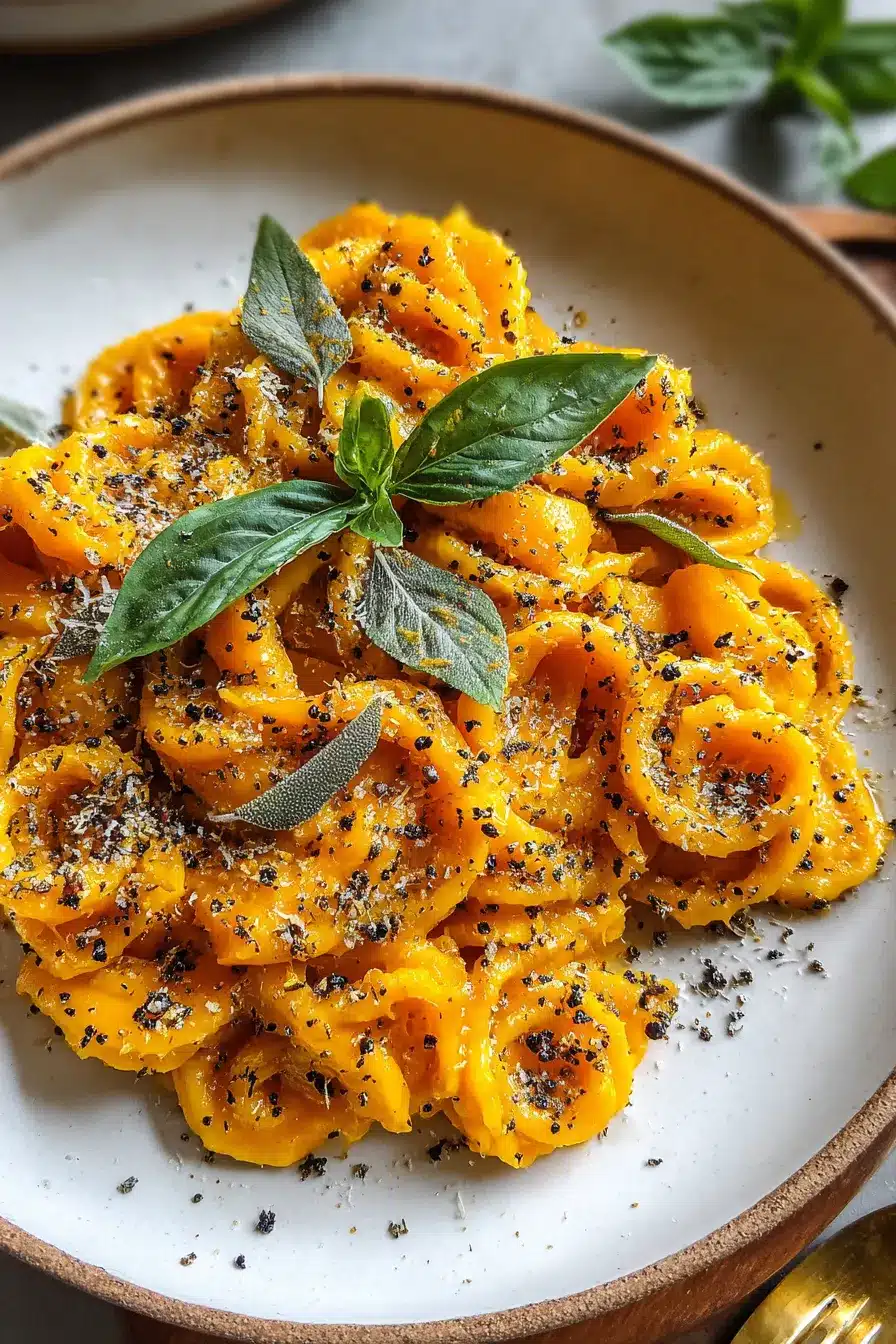
Description of this recipe
This creamy and comforting Butternut Squash Pasta Sauce is a delightful way to elevate your pasta dishes with a touch of autumnal warmth. Made with roasted butternut squash, aromatic herbs, and a hint of Parmesan cheese, this sauce is both flavorful and nutritious. It’s a perfect vegetarian option that’s easy to make and sure to impress.
Why you will love this recipe
You’ll fall in love with this Butternut Squash Pasta Sauce because it offers a harmonious blend of flavors and textures. The sweetness of the roasted butternut squash is balanced by the savory notes of garlic, onion, and herbs, creating a complex and satisfying taste. Its creamy texture, thanks to the addition of heavy cream and Parmesan cheese, clings beautifully to pasta, making every bite a delight. Plus, this recipe is incredibly versatile – you can easily customize it with your favorite herbs, spices, or vegetables to create your own signature sauce. It’s a comforting, healthy, and delicious meal that the whole family will enjoy. The rich flavor is something that tastes like a restaurant quality dish, but is very easy to make. And the fact that you can freeze it makes it even more desirable.
Ingredients:
- 1 medium butternut squash, peeled, seeded, and cubed
- 2 tablespoons olive oil
- Salt and freshly ground black pepper, to taste
- 1 medium onion, chopped
- 3 cloves garlic, minced
- ½ cup vegetable or chicken broth
- ½ teaspoon dried thyme
- ½ teaspoon dried sage
- ¼ teaspoon nutmeg
- ½ cup heavy cream
- ¼ cup grated Parmesan cheese
- Pasta of choice, cooked according to package instructions
- Fresh basil or parsley, for garnish (optional)
Preparation:
Step 1: Preheat your oven to 400°F (200°C). Prepare the butternut squash by peeling, seeding, and cutting it into uniform cubes. This ensures even cooking and a smoother sauce.
Step 2: Place the cubed butternut squash on a baking sheet. Drizzle with 1 tablespoon of olive oil, making sure to coat all the squash pieces. Season generously with salt and freshly ground black pepper. Toss to ensure the squash is evenly coated with oil and seasoning.
Step 3: Roast the squash in the preheated oven for 25-30 minutes, or until it is tender and slightly caramelized. The caramelization adds depth and sweetness to the sauce. While the squash is roasting, prepare the other ingredients.
Step 4: While the squash is roasting, heat the remaining tablespoon of olive oil in a large skillet over medium heat. Add the chopped onion and cook until it becomes translucent, about 5-7 minutes. Stir occasionally to prevent burning, and ensure even cooking.
Step 5: Stir in the minced garlic and cook for an additional 1-2 minutes until fragrant. Be careful not to burn the garlic, as it can become bitter.
Step 6: Add the roasted squash to the skillet with the onions and garlic. Pour in the vegetable or chicken broth. Add the dried thyme, dried sage, and nutmeg, stirring to combine. Simmer for 5 minutes to allow the flavors to meld together. This step is crucial for developing the complex flavor profile of the sauce.
Step 7: Remove the skillet from heat and allow the mixture to cool slightly. This will prevent splattering when blending.
Step 8: Transfer the squash mixture to a blender or food processor. Blend until smooth and creamy. You may need to do this in batches to avoid overfilling the blender or food processor.
Step 9: Return the blended sauce to the skillet over low heat. Stir in the heavy cream and grated Parmesan cheese. Cook for a few minutes until the cheese is melted and the sauce is heated through.
Step 10: Taste and adjust seasoning with more salt and pepper if needed. Remember, the flavor of the sauce will intensify as it cooks, so add seasoning gradually.
Step 11: Toss your cooked pasta in the sauce until well coated. If the sauce is too thick, you can add a little reserved pasta water to reach your desired consistency. The pasta water contains starch, which will help the sauce cling to the pasta.
Step 12: Serve hot, garnished with fresh basil or parsley if desired. A sprinkle of extra Parmesan cheese is also a nice touch.
COOKING Rating:
Easy
Serving Suggestions:
This Butternut Squash Pasta Sauce is incredibly versatile and pairs well with a variety of pasta shapes. Try it with penne, fusilli, or farfalle for a satisfying meal. You can also serve it over gnocchi or ravioli for a more decadent experience. For a complete meal, serve with a side of roasted vegetables, a simple salad, or some crusty bread for dipping. It also pairs nicely with chicken or grilled salmon.
Tips:
- For a richer flavor, use brown butter instead of olive oil to sauté the onion and garlic.
- To make this recipe vegan, substitute the heavy cream with coconut cream and omit the Parmesan cheese, or use a vegan Parmesan alternative.
- Roasting the squash brings out its natural sweetness, but you can also steam or boil it if you’re short on time.
- If you don’t have fresh herbs on hand, dried herbs work just as well. Use about half the amount of dried herbs as you would fresh herbs.
- This sauce can be made ahead of time and stored in the refrigerator for up to 3 days or frozen for up to 2 months.
- Add some red pepper flakes for a touch of heat.
- A splash of white wine can add another level of depth and sophistication.
Prep Time:
20 minutes
Cook Time:
40 minutes
Total Time:
60 minutes
Nutritional Information:
(Approximate values per serving, will vary based on specific ingredients and portion sizes)
- Calories: 450
- Protein: 15g
- Sodium: 300mg
Conclusion
This Butternut Squash Pasta Sauce is a delightful and flavorful dish that is perfect for any occasion. With its creamy texture, rich flavors, and easy preparation, it’s sure to become a family favorite. Whether you’re looking for a comforting weeknight meal or an impressive dish to serve to guests, this recipe is a winner. So, gather your ingredients, follow the steps, and enjoy a taste of autumn in every bite!
5 Questions and Answers About This Recipe
Q1: Can I make this sauce ahead of time?
A: Absolutely! This sauce can be made ahead of time and stored in the refrigerator for up to 3 days or frozen for up to 2 months. Simply reheat it on the stovetop over low heat, stirring occasionally, until heated through. If frozen, thaw it overnight in the refrigerator before reheating.
Q2: What kind of pasta works best with this sauce?
A: While this sauce is versatile and pairs well with many types of pasta, some shapes work better than others. Penne, fusilli, and farfalle are all excellent choices because their ridges and curves help to hold the sauce. Gnocchi and ravioli are also delicious options for a more decadent meal.
Q3: Can I make this recipe vegan?
A: Yes, you can easily adapt this recipe to be vegan. Simply substitute the heavy cream with coconut cream and omit the Parmesan cheese, or use a vegan Parmesan alternative. Be sure to check the ingredients of your vegetable broth to ensure it is vegan-friendly.
Q4: How can I make the sauce thinner?
A: If the sauce is too thick, you can add a little reserved pasta water to reach your desired consistency. The pasta water contains starch, which will help the sauce cling to the pasta. You can also add a splash of vegetable or chicken broth.
Q5: What other vegetables can I add to this sauce?
A: This sauce is a great base for adding other vegetables. Roasted bell peppers, spinach, kale, or mushrooms would all be delicious additions. Simply sauté the vegetables with the onion and garlic, or roast them alongside the butternut squash. Adjust the cooking time as needed, depending on the vegetables you choose.